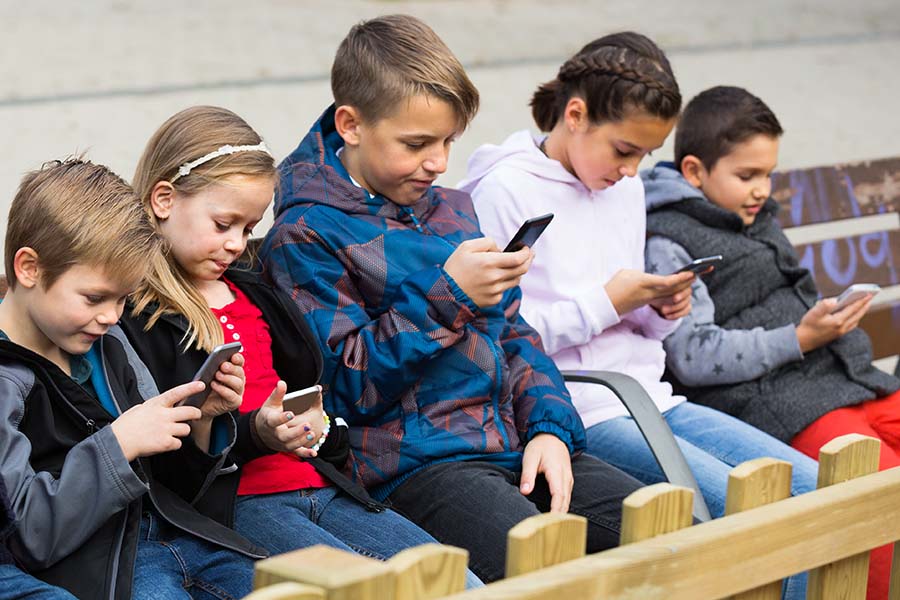

The government has launched a public consultation on children’s digital wellbeing and is seeking feedback on measures to protect children on social media, gaming platforms and in the use of AI chatbots.
The consultation, announced jointly by technology secretary Liz Kendall and education secretary Bridget Phillipson on Monday, covers platform features associated with children’s prolonged online engagement, including infinite scrolling, autoplay functions and age verification mechanisms.
“Millions of parents across the country worry about what social media is doing to their children’s sleep, concentration and mental health,” the Department for Science, Innovation and Technology said in a statement.
“Many feel they are fighting a losing battle against platforms designed to keep children scrolling. They are grappling with how much screen time their children should have, when they should give them a phone, what they are seeing online, and the impact all of this is having. They worry about their children talking to chatbots as if they’re real people and relying on their advice.”
The consultation, which the government describes as “the world’s most ambitious consultation on social media”, will gather insights on how to keep children safe online across social media, AI chatbots and gaming platforms.
Campaigners have advocated for a complete prohibition on social media use for children under 16, but children’s charities and legal experts have raised concerns that such a measure could redirect young people toward less regulated platforms and leave them without digital literacy skills when restrictions lift.
Writing in Today’s Family Lawyer earlier this year, family law barrister Baljinder Bath said any restriction must be “lawful, necessary, and proportionate”.
“A blanket ban promotes a cliff edge whereby children can activate or reactivate social media accounts upon attaining the age of 16,” she added. “They will then suddenly be exposed to the online social media world without the scaffolding of early literacy, resilience or supervised learning.”
The consultation is framed to address both positions, with feedback invited on a range of interventions.
Education secretary Bridget Phillipson explained:
“Technology is fundamentally changing childhood. Used well, it can open up new opportunities for learning, creativity and connection, but only if we get the balance right. That is why we want to hear directly from parents, teachers and young people about how we strike that balance and give children the very best childhood in a digital age.
“Today’s consultation is a vital next step. For the first time, we will also publish guidance on healthy screen time for children aged 5 to 16, giving parents the practical tools to help their children build a healthier relationship with technology from an early age.”
Alongside the consultation, the government will run live pilots with families and teenagers to test how potential restrictions, including social media bans, overnight curfews and daily screen time limits will function in practice.
The consultation is open until 26 May, with dedicated versions available for young people, parents and carers to make it easier for them to share their views.
The government will respond in the summer and says it will act swiftly on the evidence gathered.
The prime minister and technology secretary have announced new legislative powers that will allow the government to “act at pace” on the consultation’s findings.